Physical Therapy
To offer a positive setting and a clinical team that works together to maximize the quality of care for our patients. Individualized care in a tranquil environment that allows patients the space to process and communicate with their therapists.
The therapists here truly listen and treat each patient like they are a family member of our own. We understand that there are many things in life that contribute to physical pain and so we feel that taking a holistic approach is necessary for maximum progress. Being able to improve a person’s quality of life is what motivates us to be better.
Office Locations
Phone: 240-406-4620 Fax: 240-558-3455
Frederick
198 Thomas Johnson Dr, Suite 16
Frederick, MD 21704
ROCKVILLE
3202 Tower Oaks Blvd, Suite 300
Rockville, MD 20852
Manual Therapy
Myofascial release:
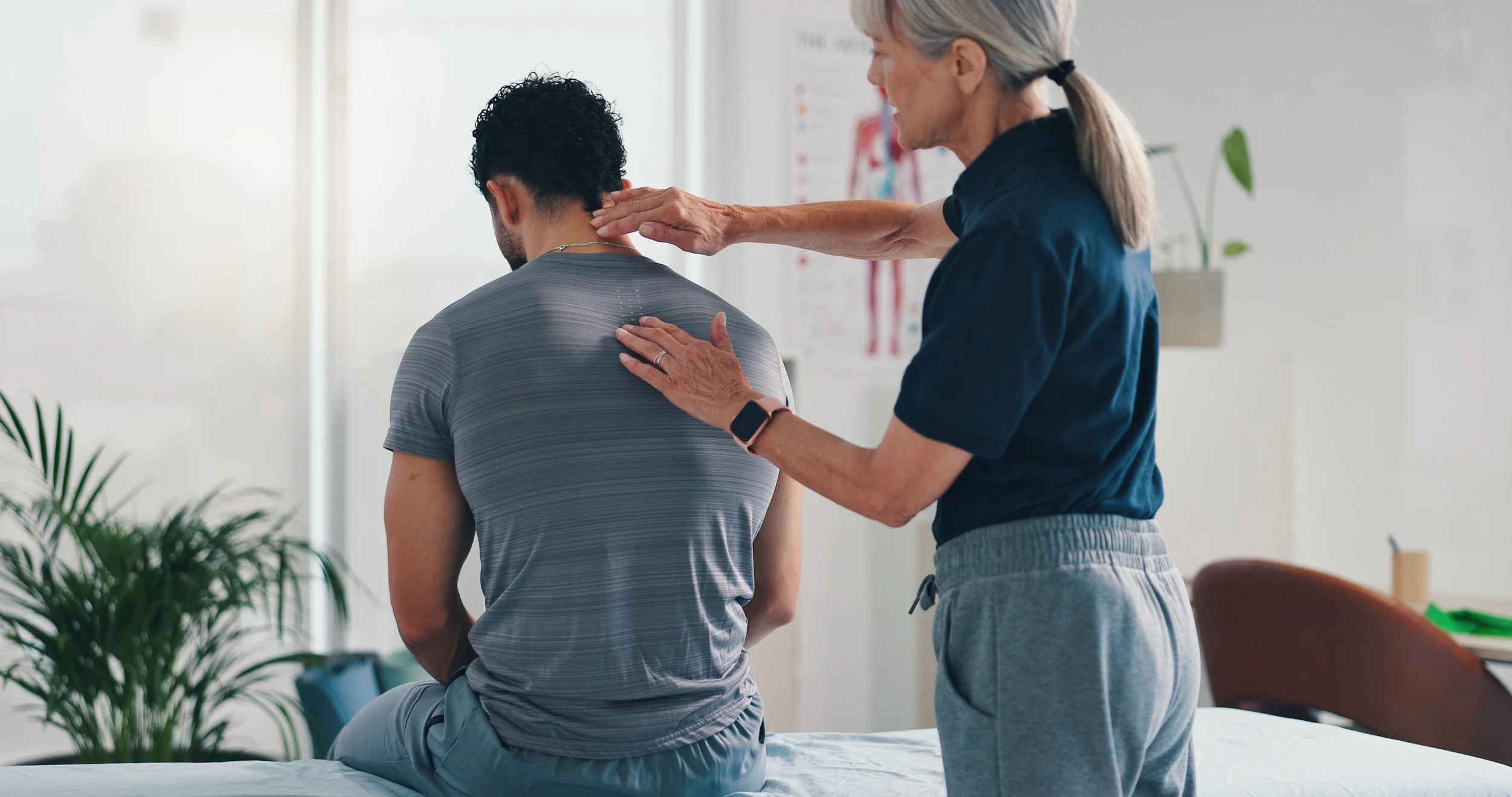
Myofascial release (MFR) is a technique that focuses on reducing pain by easing the tension and tightness in contracted muscles and improving circulation. Fascia is a thin, tough, elastic type of connective tissue that encapsulates most structures in the body, including muscle. Patients with myofascial pain syndrome and chronic headaches could really benefit from this technique. Your clinician will use their hands to massage and stretch your myofascial tissue and work on eliminating areas of restriction.
Active Release Techniques:
Active release (ART) is a technique that aims to relieve tissue tension by removing fibrosis/adhesions, which can develop in tissues as a result of overload due to repetitive use. These disorders may lead to muscular weakness, numbness, pain, tingling, and burning. Your clinician will use manual therapy to apply compressive, tensile, and shear forces to address repetitive strain injuries, cumulative trauma injuries, and constant pressure tension lesions. Tension will be applied at the area of tenderness whilst the patient is instructed to actively move the injury site from a shortened to a lengthened position.
Instrument Assisted Soft Tissue Mobilization (IASTM):
Instrument Assisted Soft Tissue Mobilization (IASTM) is a therapeutic technique using specialized, typically stainless-steel tools to scan and treat fascial restrictions, muscle tightness, and chronic inflammation. This breaks down scar tissue, increases blood flow, and accelerates healing for conditions like tennis elbow and plantar fasciitis, often reducing pain and increasing mobility faster than manual therapy
Joint/Spine Mobilizations:
Joint mobilization is a technique that is used to improve painful, stiff or otherwise compromised joints in order to improve its overall function. Joint mobilizations are used to help improve range of motion, reduce pain, and minimize stiffness. Your clinician stabilizes one segment of a joint while applying a force to the adjoining body region. This force is usually applied in the direction of the tightness and can be more gentle and oscillating or more forceful and sudden, depending on the type of technique being performed.
Soft Tissue Mobilization:
Soft tissue mobilization (STM) techniques are used to break up rigid muscle tissue, relax muscle tension, and move fluids trapped in the tissues that cause pain and inflammation. STM can also help Break down or reduce adhesions, improve range of motion, lengthen muscles and tendons, reduce swelling and edema, decrease pain and restore function.
LSVT BIG® Program:
A standardized, intensive treatment focused on "amplitude" training, aimed to train patients to use "BIG" movements to overcome the tendency toward small, slow motions. The program typically involves 16 one-hour sessions over four weeks (four days per week). The goal is to improve walking speed, balance, and the ability to perform daily tasks like dressing or standing up.
Neuroplasticity-Based Retraining:
Uses high-effort, repetitive exercises to help the brain form new pathways for more automatic movement.
Fall Prevention & Postural Training:
Specific exercises to address the postural instability common in progressive neurological disorders.
Functional Task Training:
Practicing real-world movements (like getting in/out of a car) to maintain independence.
Therapeutic Exercise
Therapeutic exercises are movements and physical activities prescribed to correct impairments, restore muscular and skeletal function, improve strength and decrease pain. After your clinician performs the evaluation to assess your condition, he/she will work with you to develop a program of therapeutic exercises designed to promote healing and improve function unique to each patient.
Neuromuscular Re-education
Neuromuscular re-education (NMR) consists of manual techniques, activities for balance and core control and other therapeutic exercises that are designed to restore normal movement patterns. Your nerves and muscles work together to produce movement. Nerves send signals between your muscles and brain about where, when and how fast to move. With NMR, muscle movement patterns can be re-learned and stored in your memory for long lasting effects. The goal of neuromuscular re-education activities is to re-train a body part to perform a task that the body part was previously able to do.
Balance/Proprioception
Balance and proprioception is our ability to stay safely upright without injury. Proprioception is an internal regulatory system that governs the ability to generate and maintain an effective upright posture and physical balance. In order for us to remain upright, our brain needs constant input from our muscles and joints. This input enables the brain to monitor our position in space and make corrections when necessary. Your clinician will prescribe exercises after determining where the deficits are to maximize the patient’s independence and safety with their daily activities.
Gait Training
Gait training is necessary to perform when someone is walking improperly. Gait training involves practicing sets of exercises that strengthen your muscles and increase your range of motion. This treatment may be necessary for you if you experience pain while walking, recently had surgery that affects your ability to walk or if you experience limitations to your daily activities. Ultimately, the goal of gait training is to improve the way one walks and minimize compensatory movements.
Conditions (not all inclusive):
Injuries related to work
Sciatica
Low Back Pain
Mid Back Pain
Neck Pain
Carpal Tunnel
Tennis Elbow
Pre-Surgical Rehabilitation
Post-Surgical Rehabilitation
Headaches
Neurological Disorders
Chronic pain
Osteoarthritic pain
Sports injuries